















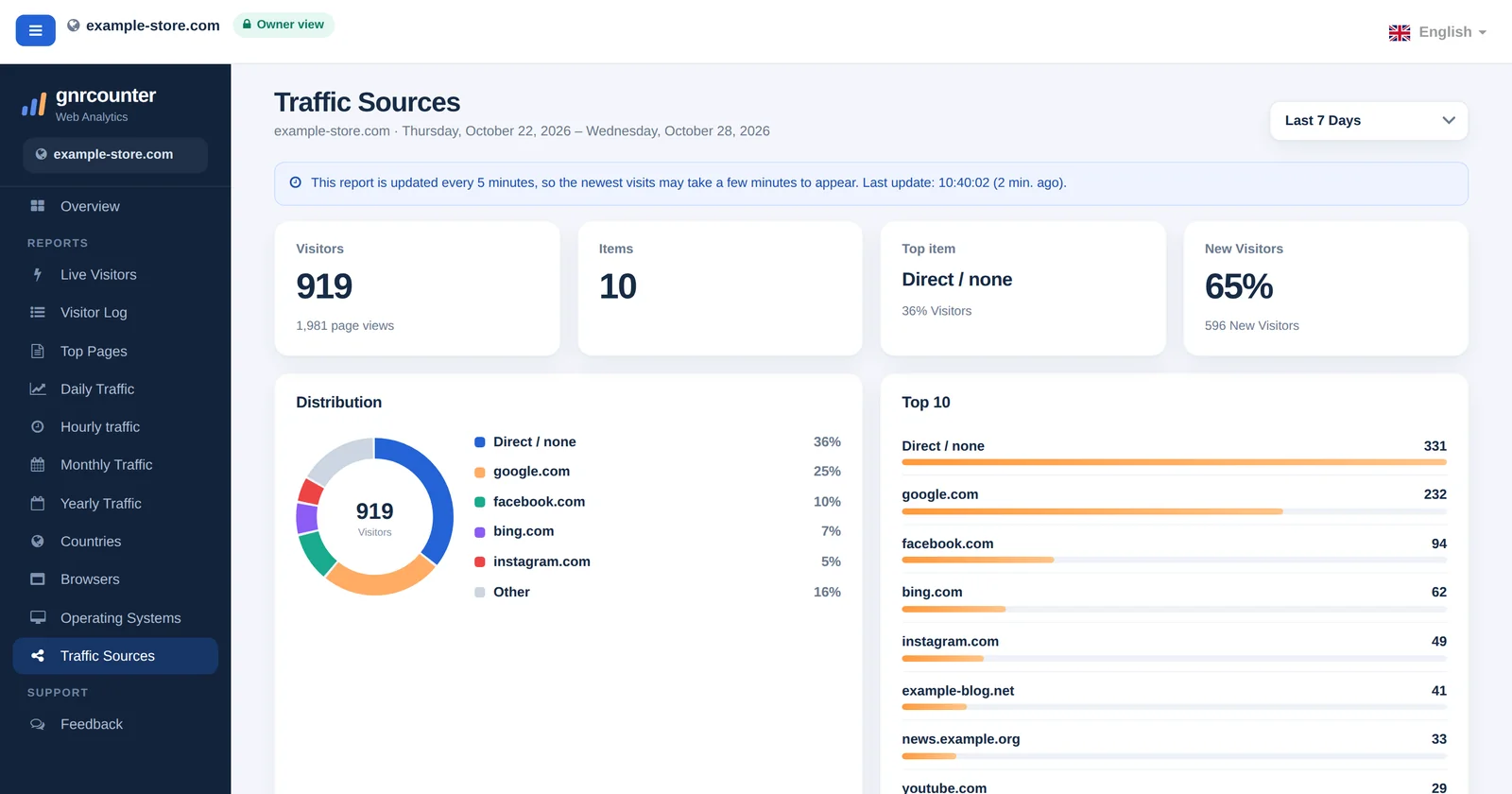
Traffic Sources shows how visitors found your site: from a search engine, a social network, another website or by typing the address. You see how many visitors each source brings, which one leads and how many pages those visitors view. It tells you which channels deserve your effort.
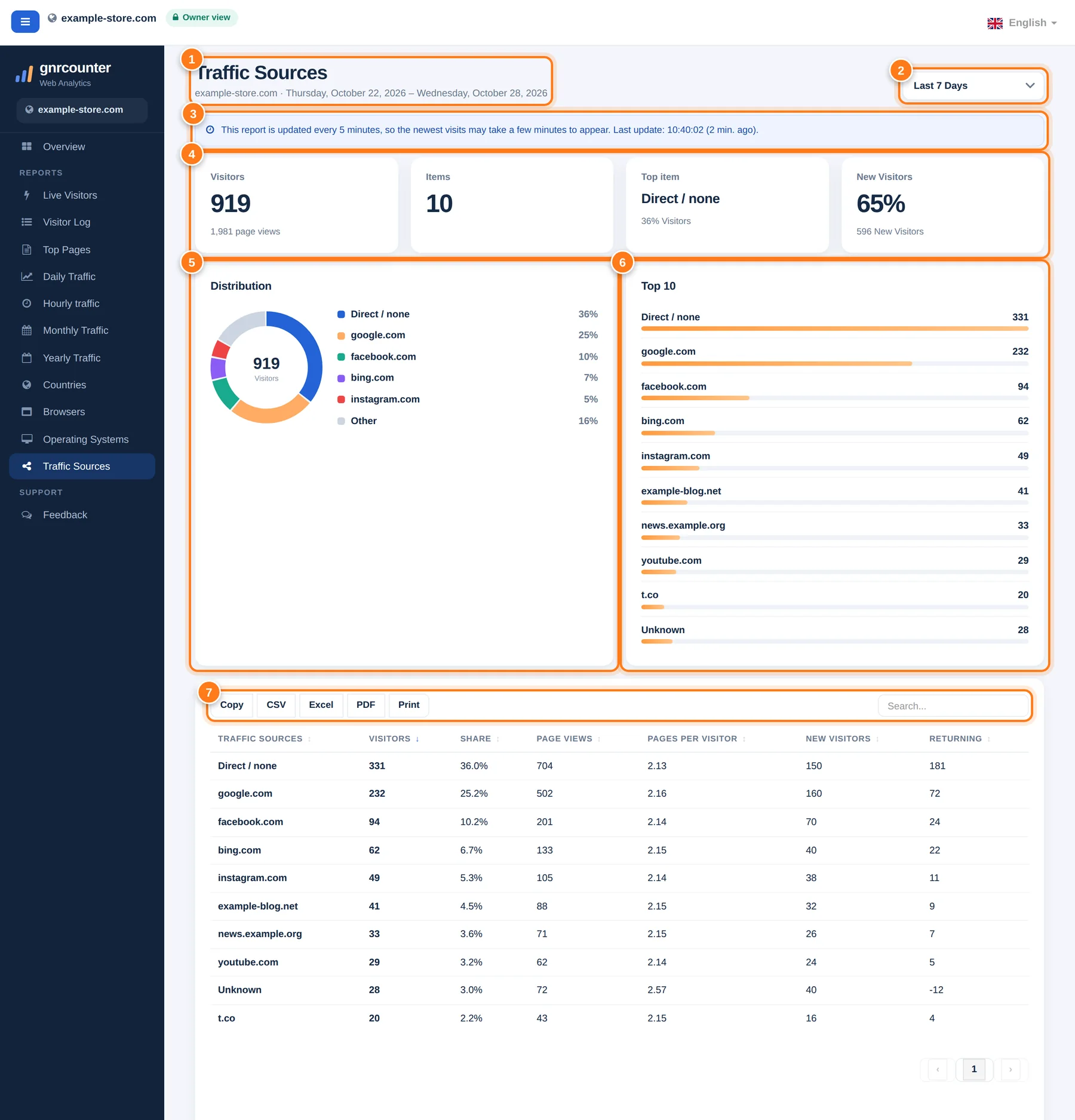
Traffic Sources with its areas numbered. All figures in this guide are sample data from a fictional website.
A tour step by step
The numbers below match the markers in the picture.
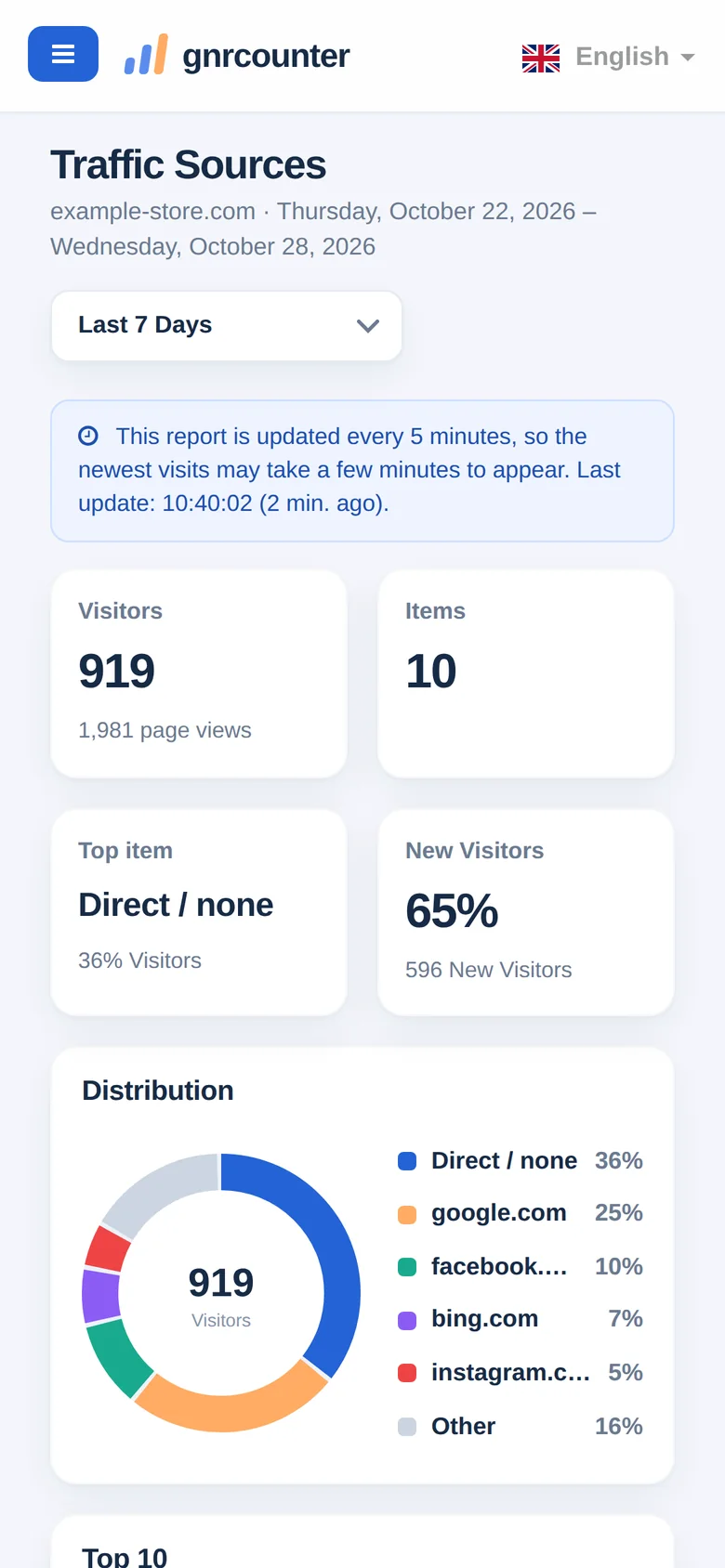
- Header and periodThe report title, your site name and the first and last day of the range.
- Date range menuChoose from ten ranges, from Today to Last 12 Months. Last 7 Days is the default.
- Update noteShown when the range includes today. The report is refreshed every five minutes, so the newest visits may take a few minutes to appear.
- Four summary cardsVisitors with total page views, the number of sources listed, the top source with its share of visitors, and the share of new visitors.
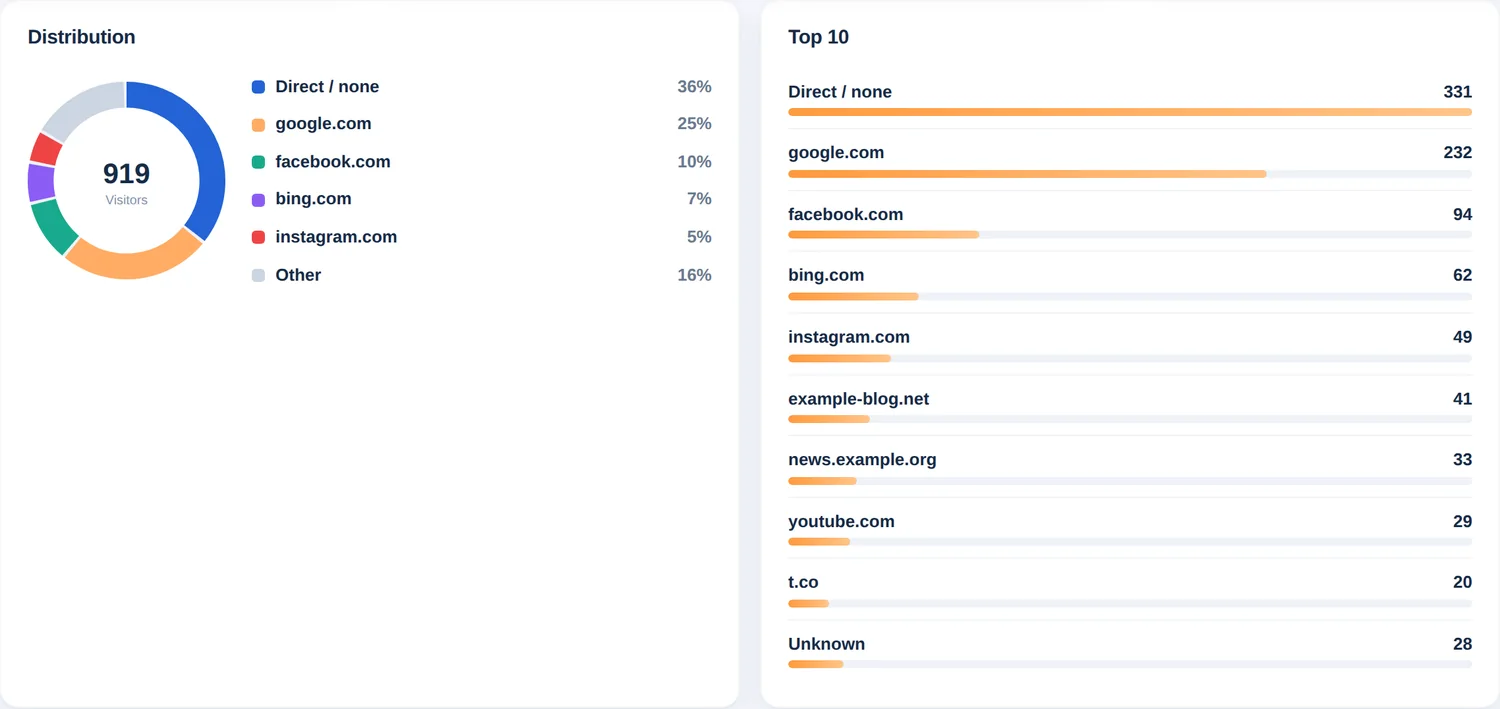
- DistributionA donut chart of the five leading sources, with all the rest grouped as Other.
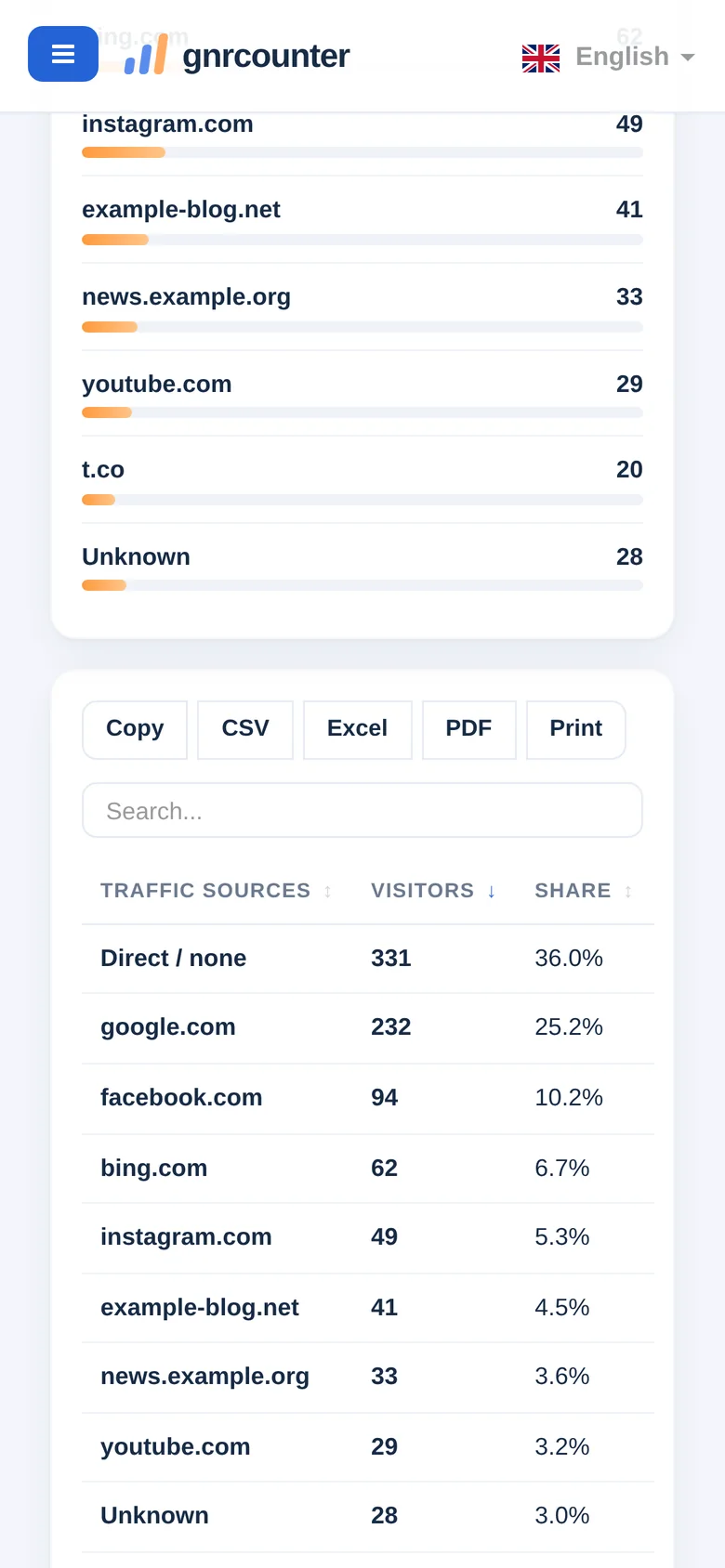
- Top 10The ten sources with the most visitors, each with a bar and the visitor number.
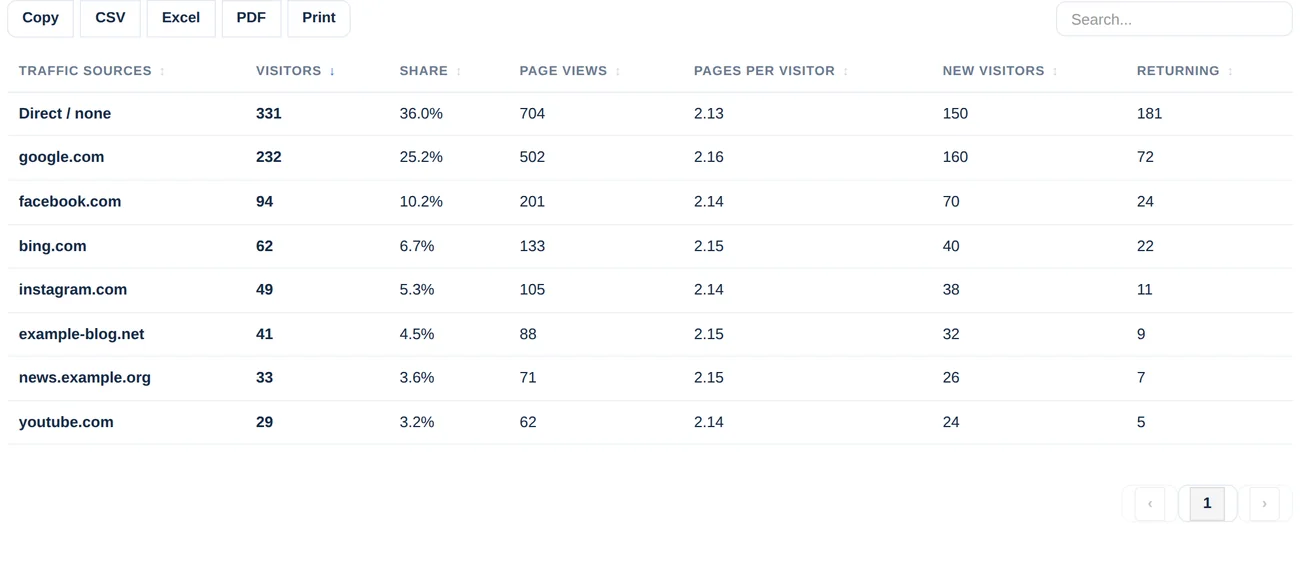
- Search and exportSearch the table below the charts or use Copy, CSV, Excel, PDF and Print.
Traffic Sources at a glance
Zoom in on the details

Reading the numbers correctly
- A source is the website that sent the visitor, so search engines and social networks appear by name. A visitor is counted once per day.
- Direct / none means the visit arrived without a referring page, for example a typed address or a bookmark.
- Unknown collects visits whose source could not be determined.
- The donut shows the five leading sources and groups the rest as Other. Known search engine and other bots are not counted.
Ways to use it
- See which channels work. Compare search, social and referring sites to decide where to spend time.
- Check a campaign. After sharing a link, watch the source for that site rise.
- Reduce dependence. If one source brings most visitors, look for a second channel.
Traffic Sources on your phone
On a small screen the summary cards come first, followed by the donut chart, the Top 10 bars and the table. Swipe the table sideways to see every column.
Common questions
Why is Direct / none so large?
Visitors who type your address, use a bookmark or come from apps and secure pages that hide the referrer are counted as Direct / none.
Why do I see Unknown?
Some visits carry no usable source information. They are grouped as Unknown.
How far back can I look?
Up to Last 12 Months, as long as your counter has been running that long.